Stress Tests
Stress tests push the cluster toward the saturation limit. The intent is not to find the maximum RPS - it is to characterise how the system behaves when it cannot serve all requests on time: does it degrade smoothly, oscillate, or fail noisily?
Online Boutique under stress
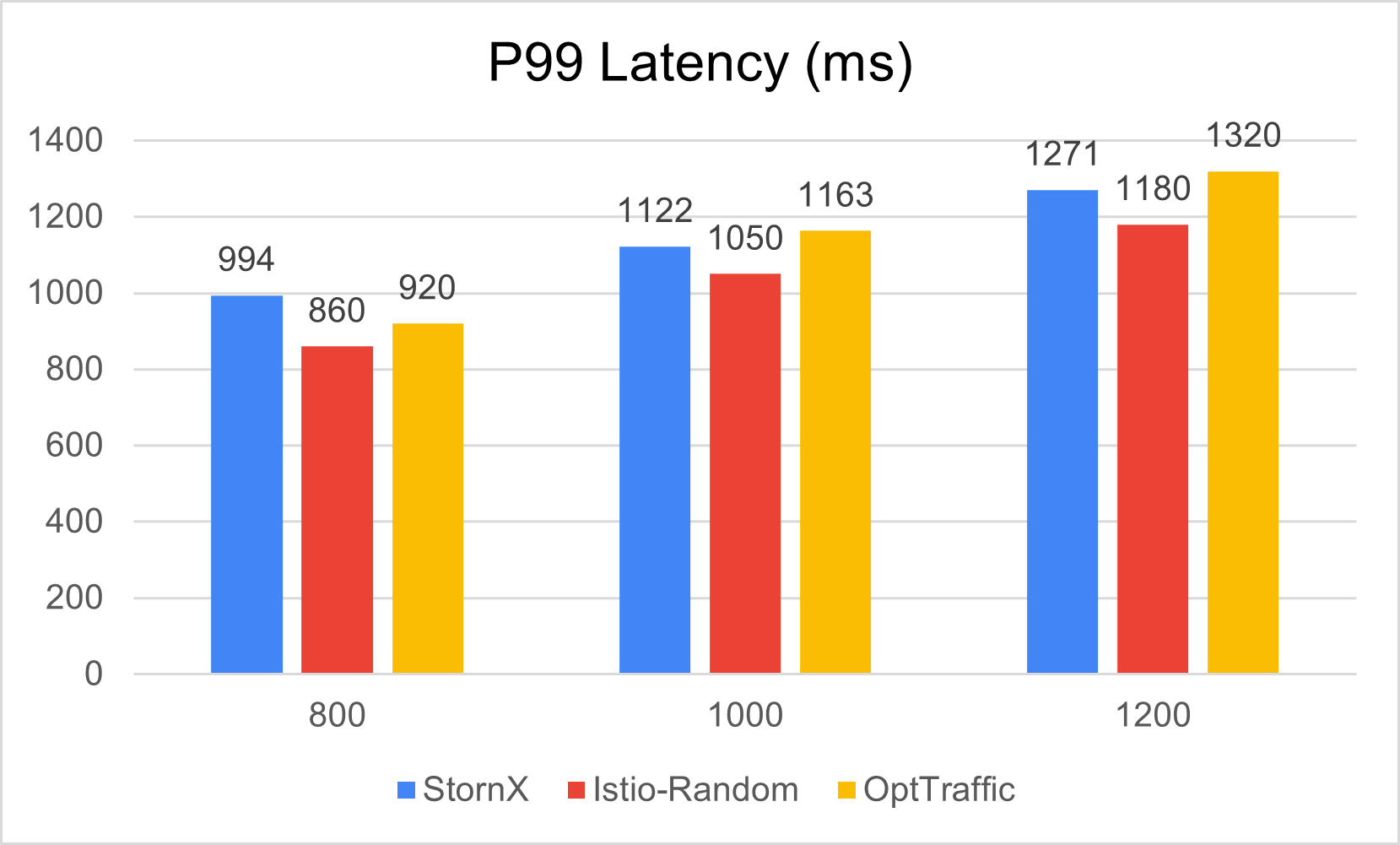
End-to-end latency tail under stress:
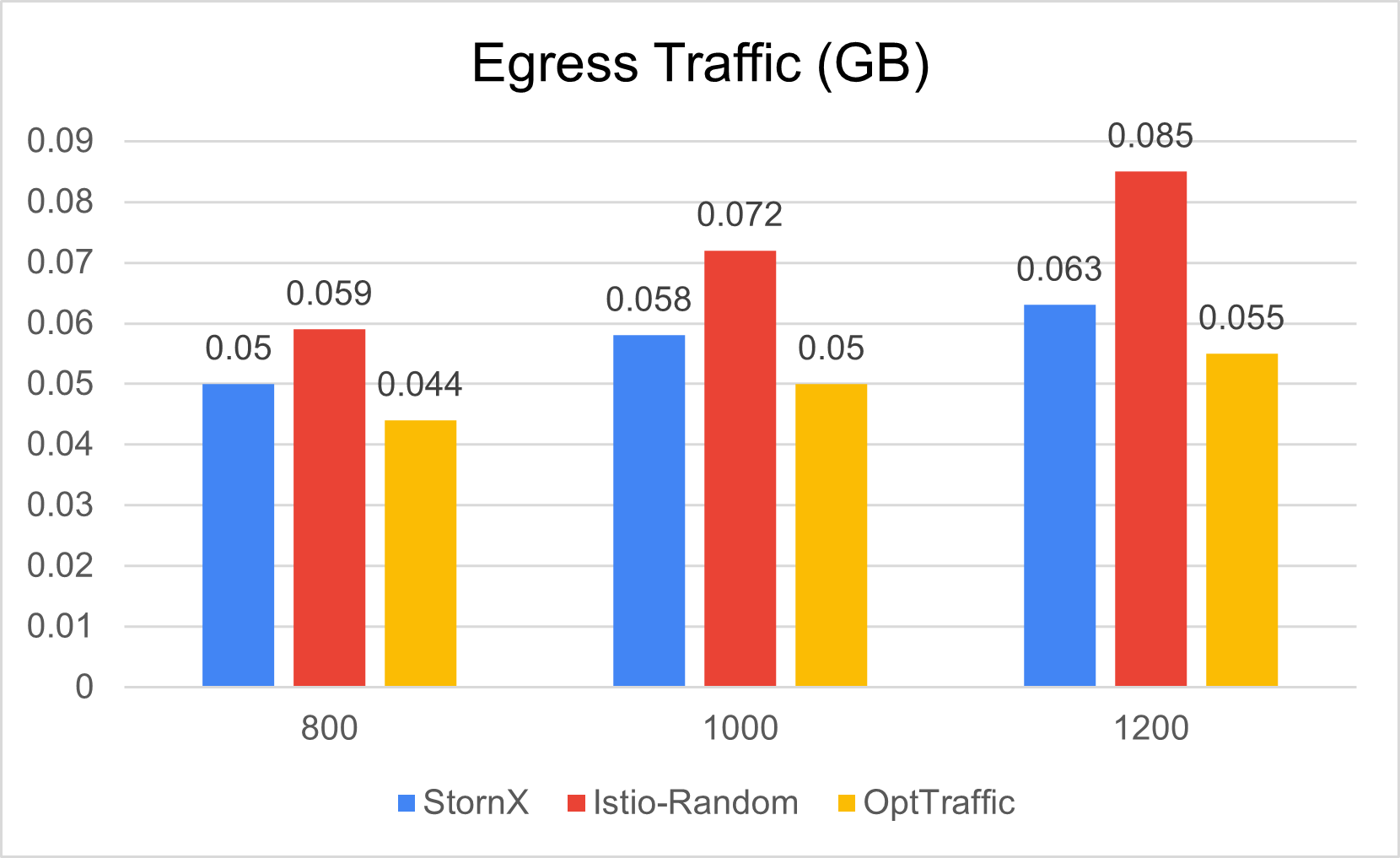
Egress bytes (the cost dimension stays meaningful under stress because chatty graphs amplify):
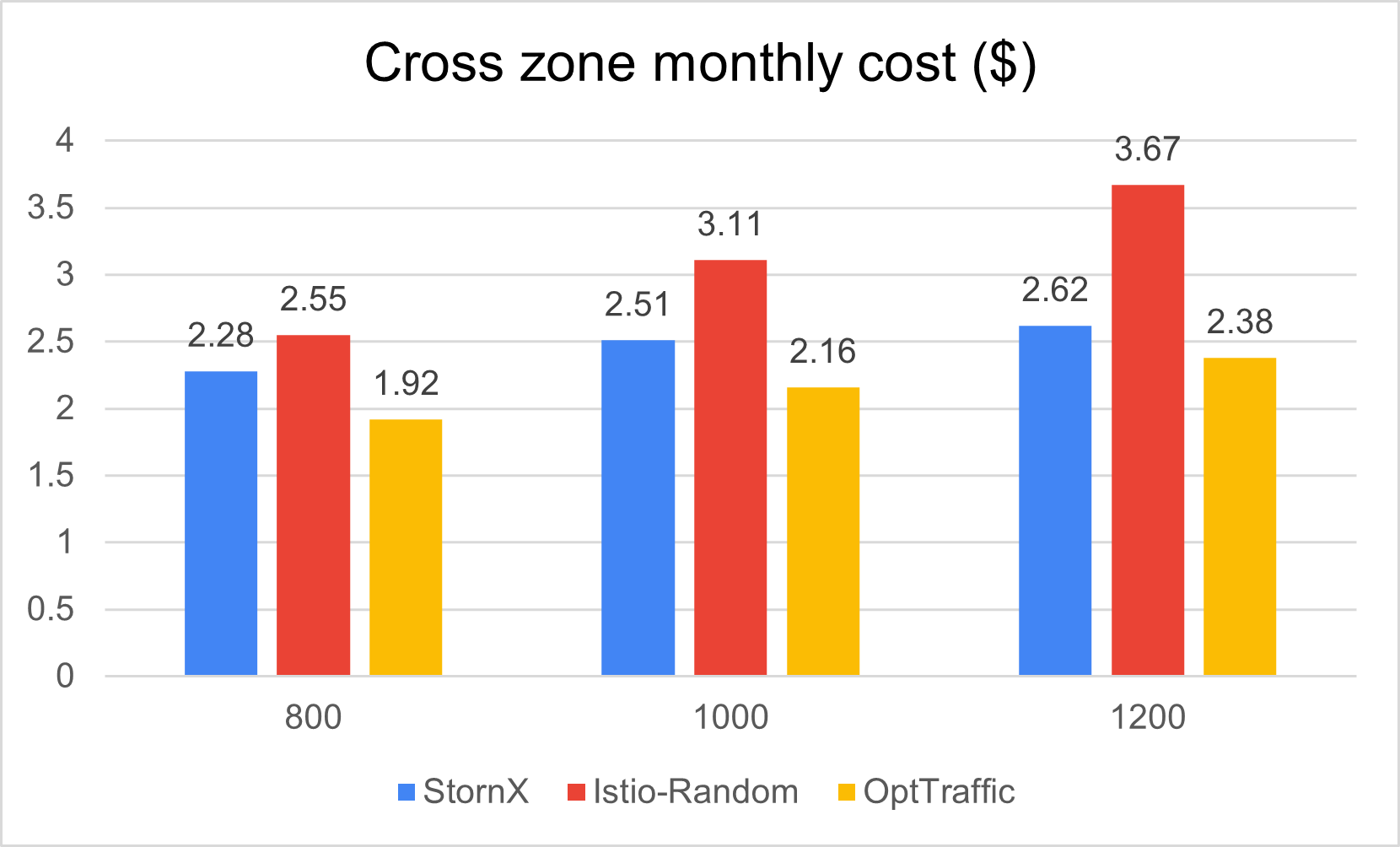
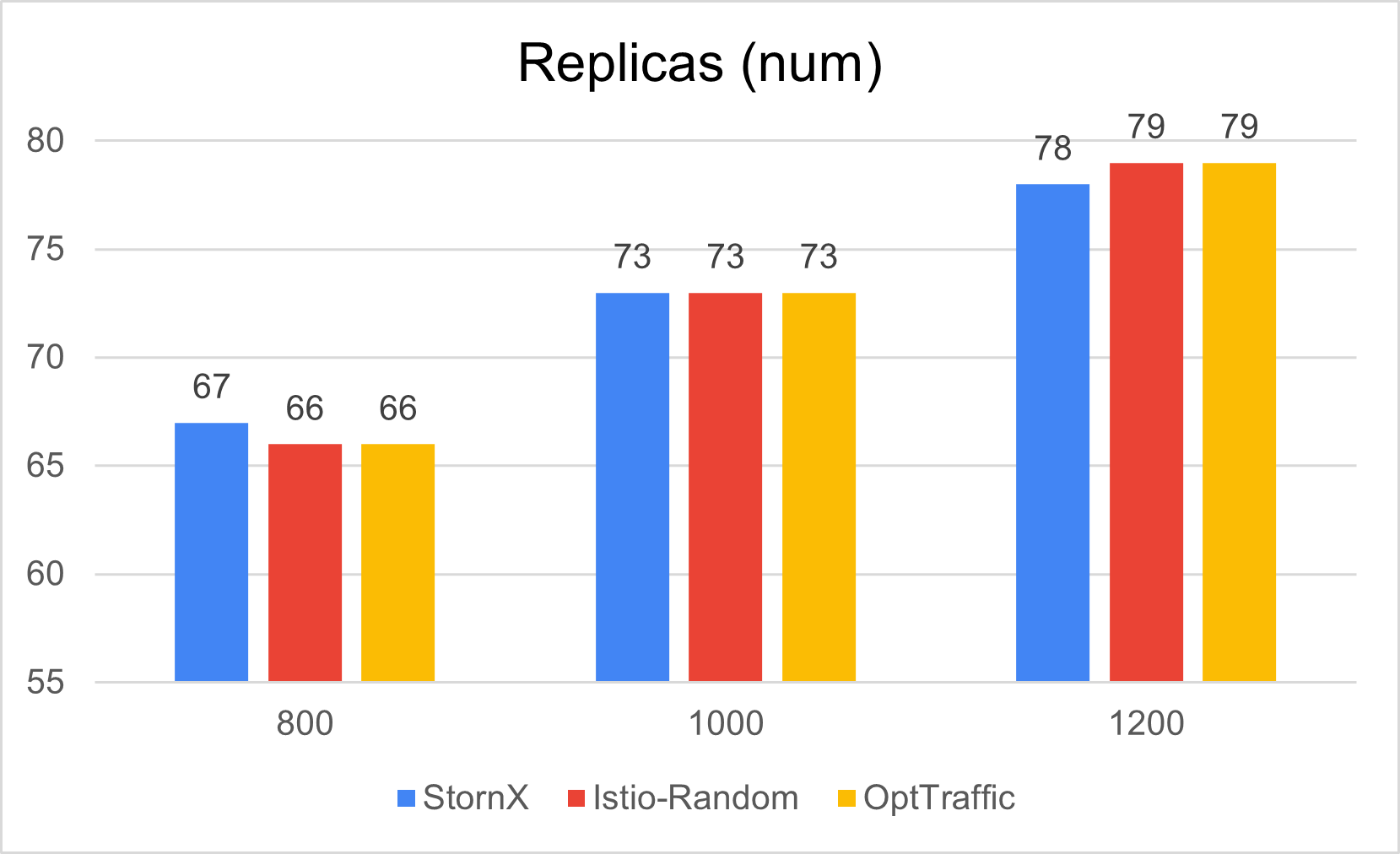
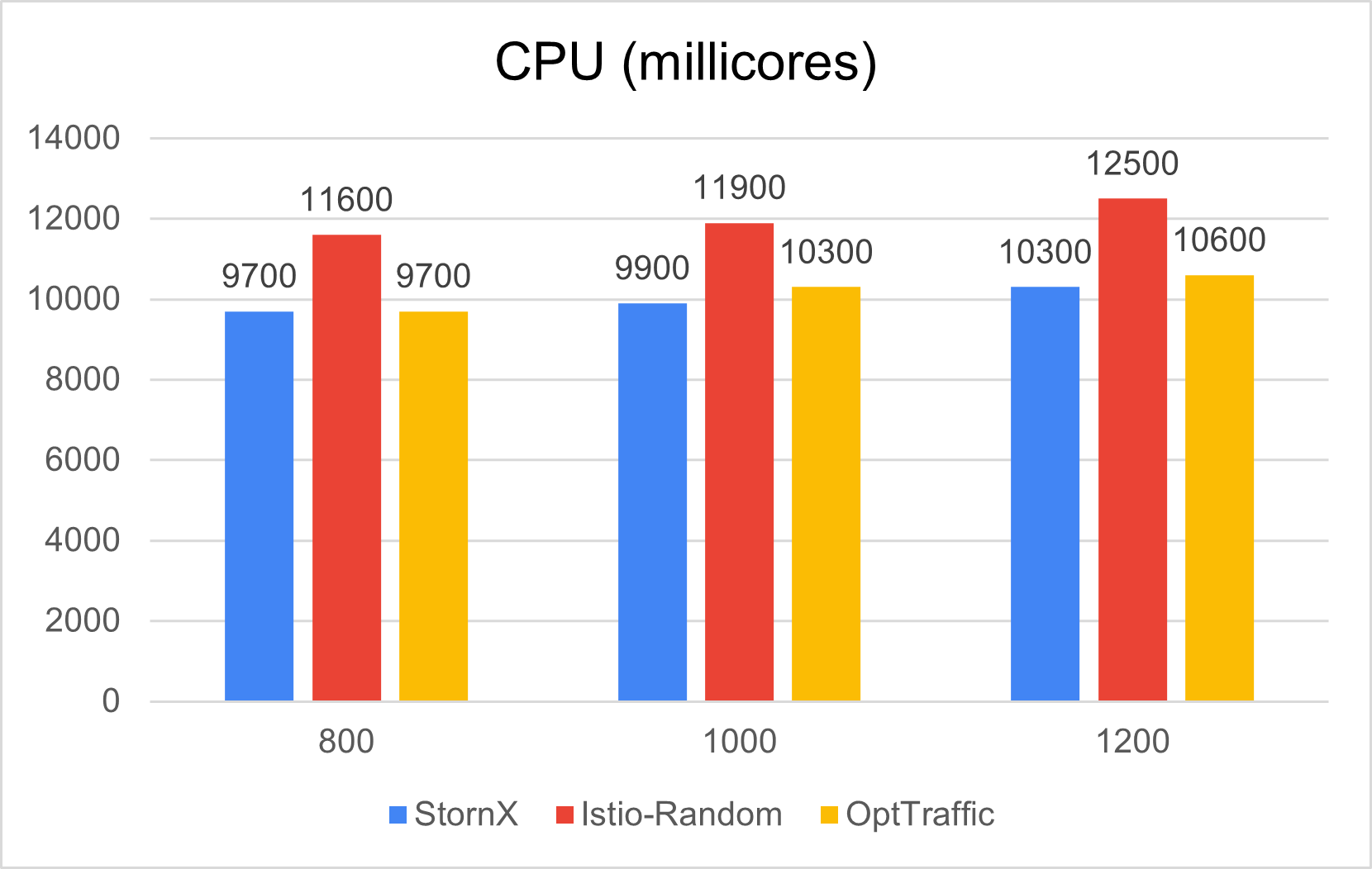
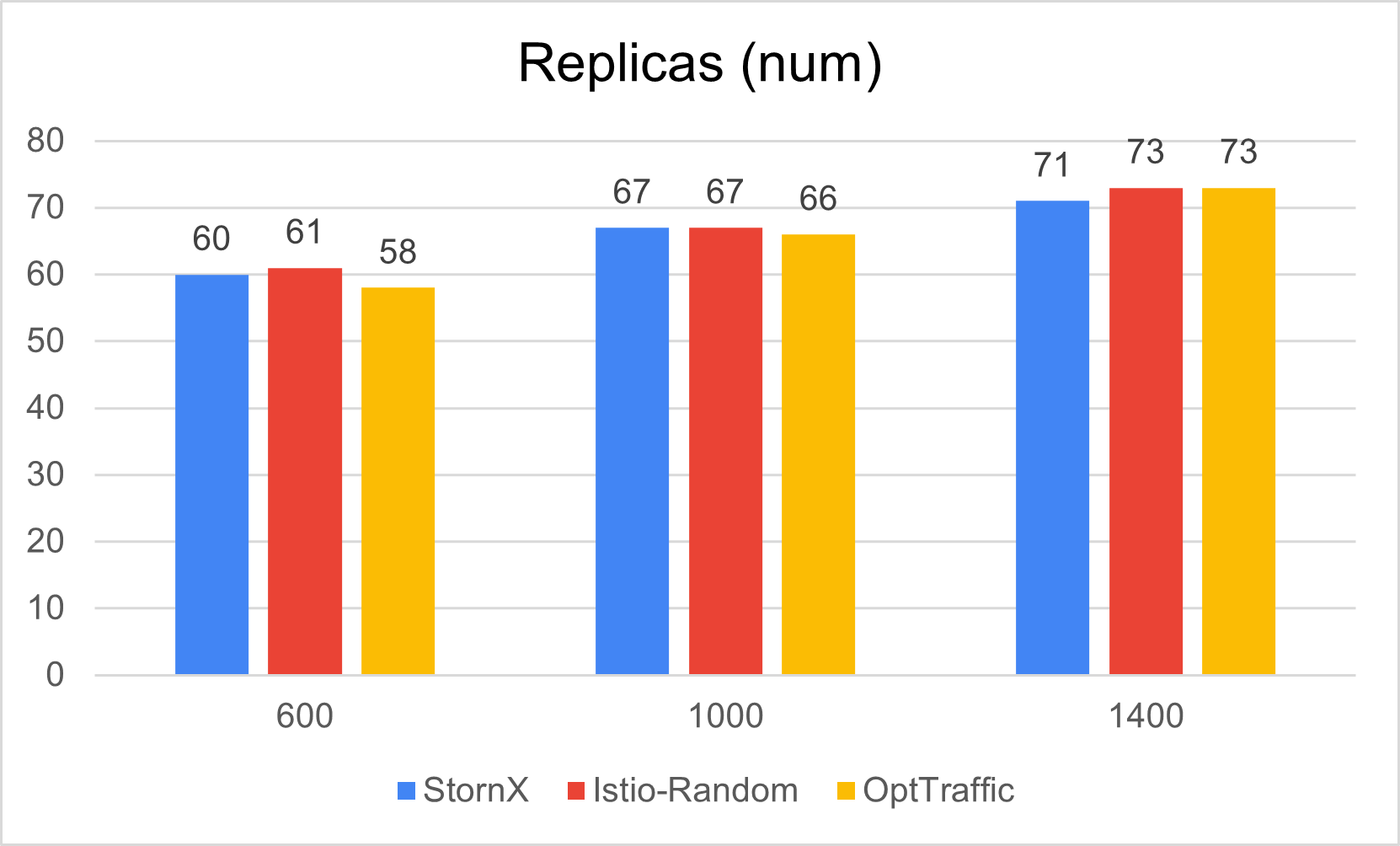
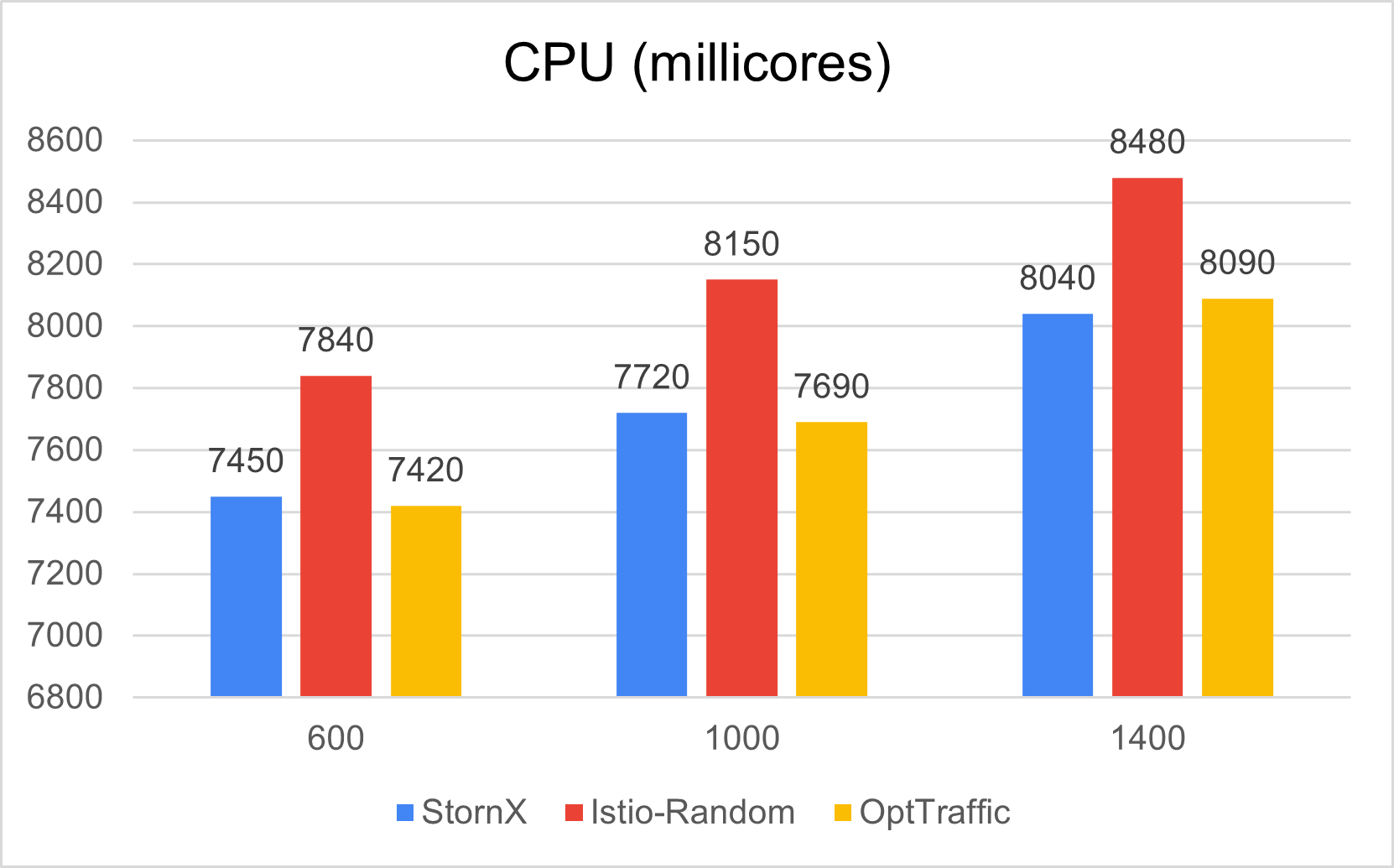
Replicas + CPU - note the smoother curves under StornX, indicating the OptiBalancer is absorbing imbalance instead of pushing it into the autoscaler:
OpenTelemetry Demo under stress
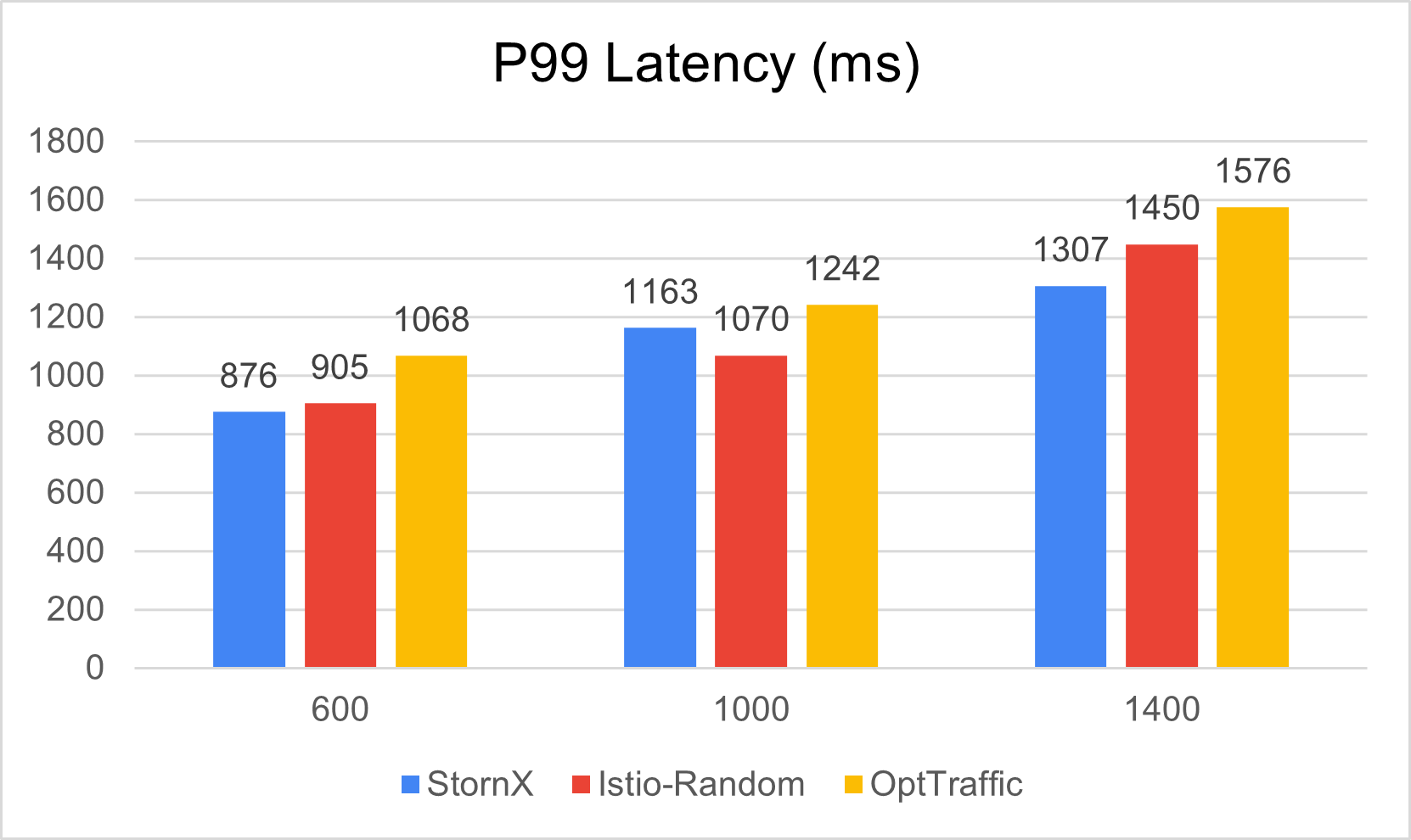
Latency:
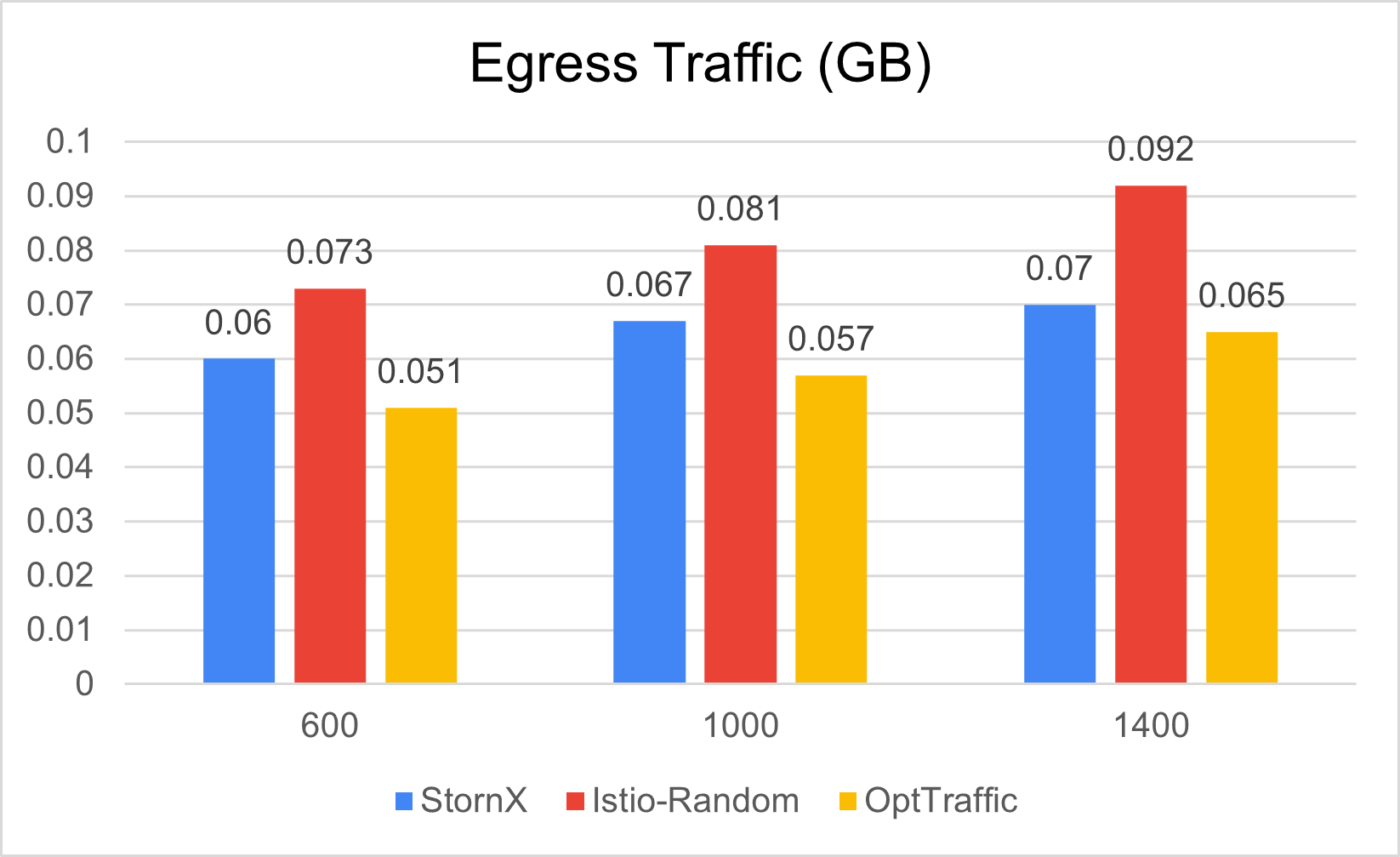
Egress + cost:
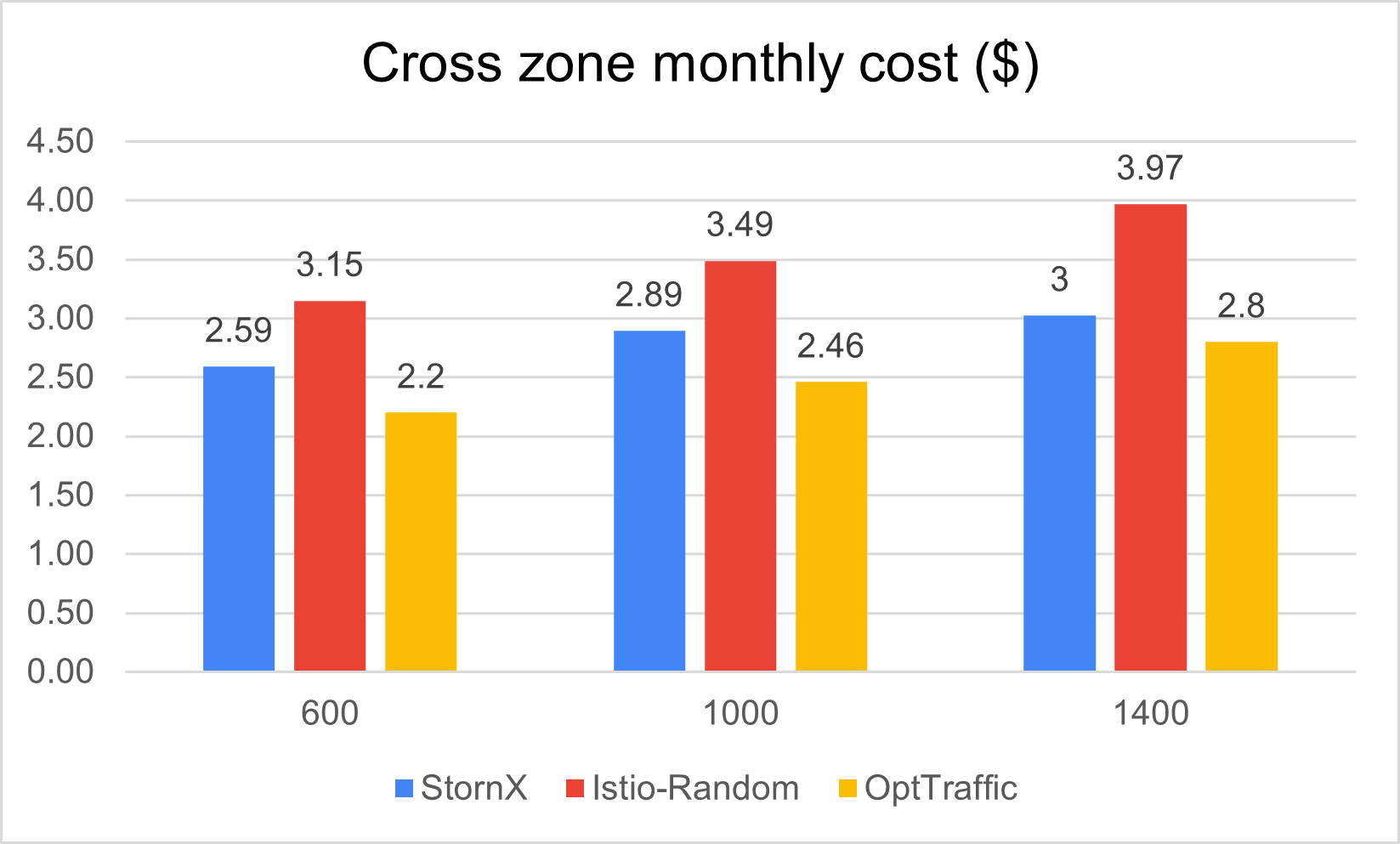
Replicas + CPU:
Reading the stress curves
When a system is pushed past its sweet spot, three failure modes are common:
- Cliff - throughput collapses suddenly when one component saturates.
- Oscillation - the autoscaler over-corrects, replica counts swing wildly, latency follows.
- Graceful degradation - latency rises smoothly, throughput plateaus, no errors.
StornX consistently produces graceful degradation in both benchmark applications. The reason is the architectural choice that runs through everything: OptiBalancer steps toward the target distribution rather than jumping to it, and OptiScaler enforces a cooldown after every scale action. Together, those guards prevent the oscillation pattern that the HPA-only baseline exhibits as load rises.